Sewage cleanup in Manhattan: what to know
Manhattan is the densest borough in the country, and its housing stock runs from the early-1900s tenements of the Lower East Side, East Village and Chinatown to grand pre-war apartment buildings and co-ops on the Upper East and Upper West Sides. Thin walls, shared stairwells, original plumbing risers and deep baseboard gaps give German cockroaches and mice constant routes between the island's tightly packed units.
Travel density makes Manhattan a bed bug hotspot: hotels, short-term rentals, frequent sublets and a steady stream of international visitors mean even spotless luxury co-ops face introductions through luggage and second-hand furniture, not poor hygiene. In multi-unit buildings a single untreated apartment rarely ends the problem, because bed bugs move along shared walls and risers.
The borough's restaurant and transit density — Times Square, Penn Station, Midtown food corridors and the subway beneath them — sustains one of the city's largest rat populations, feeding rodent pressure out into adjacent residential blocks, while green edges along Central Park, Riverside Park and the Hudson add seasonal ant and occasional-invader pressure to lower-floor and garden apartments.
Signs you need sewage cleanup
- Sewage or wastewater has backed up into a basement, bathroom or lower-level fixture
- A toilet, floor drain or basement fixture is backing up rather than draining normally
- A strong sewage odor is present following a plumbing backup or heavy rain event
- Standing water with visible contamination or waste material is present in the affected area
- A previous sewage event was cleaned up without professional sanitisation and an odor or health concern remains
How we treat sewage cleanup in Manhattan
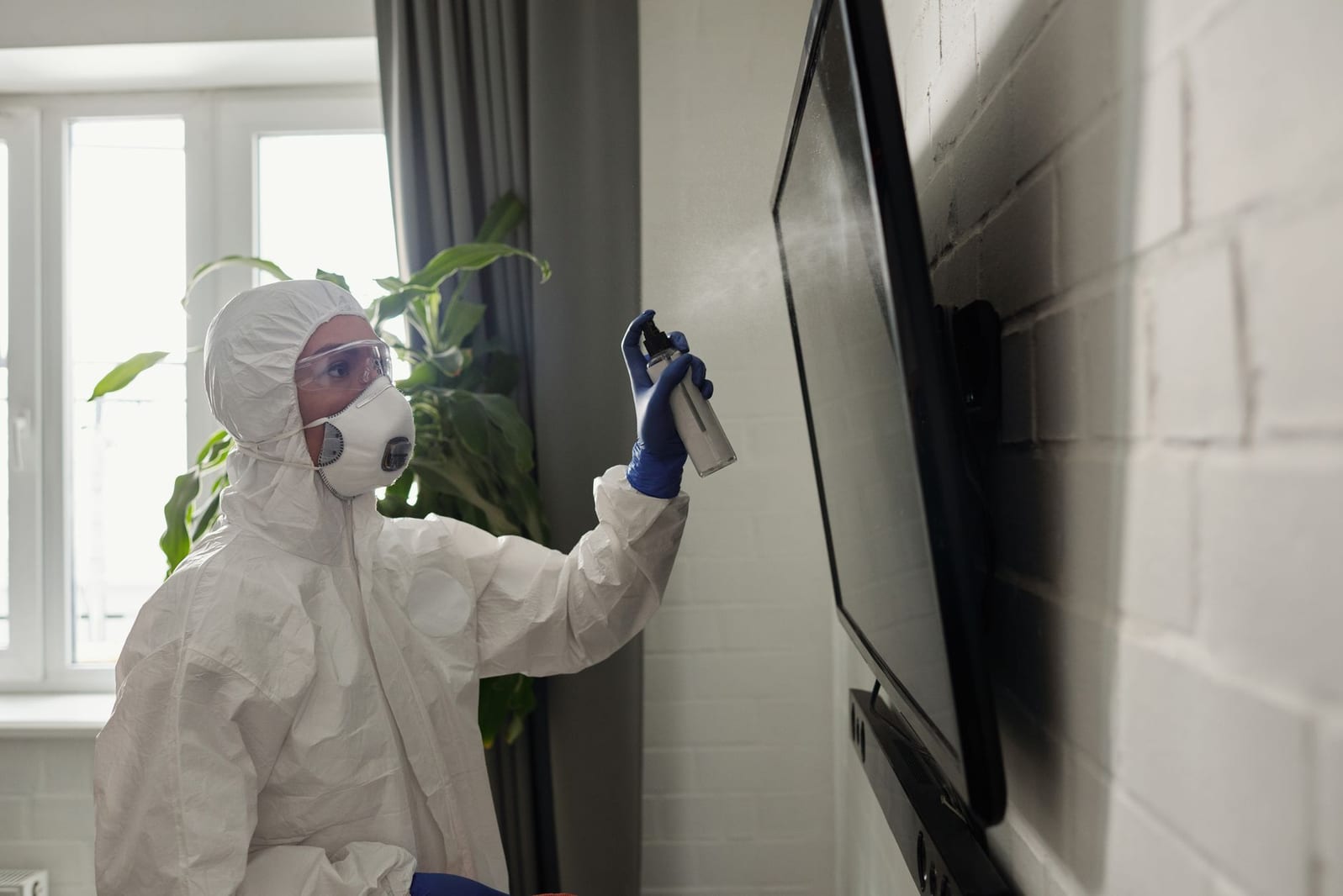
Sewage backup is classified as black water — restoration-industry standards (IICRC) treat it as Category 3, the most contaminated water classification, because it can carry bacteria, viruses and other pathogens regardless of how the backup happened. That classification changes the entire approach compared with a clean supply-line leak: our crews use protective equipment throughout, and the standard for what can be saved versus what has to be removed and discarded is much stricter, because porous materials that have absorbed contaminated water generally can't be fully sanitised.
The process starts with extracting the contaminated water as quickly as possible, since the longer it sits, the further it spreads into subfloor, baseboards and wall cavities, and the more surface area ends up needing disposal rather than cleaning. Carpet, carpet padding, drywall up to the affected height and other porous materials that contacted sewage are typically removed and disposed of rather than cleaned, while hard, non-porous surfaces (tile, sealed concrete, some hard flooring) can usually be cleaned, disinfected and retained.
Local landmarks & coverage
We serve all of Manhattan and the surrounding Manhattan area — including Central Park, Times Square, Empire State Building, Wall Street, Grand Central Terminal, the High Line — across ZIP codes 10001, 10002, 10009, 10011, 10014, 10016, 10019, 10025, 10027, 10128.