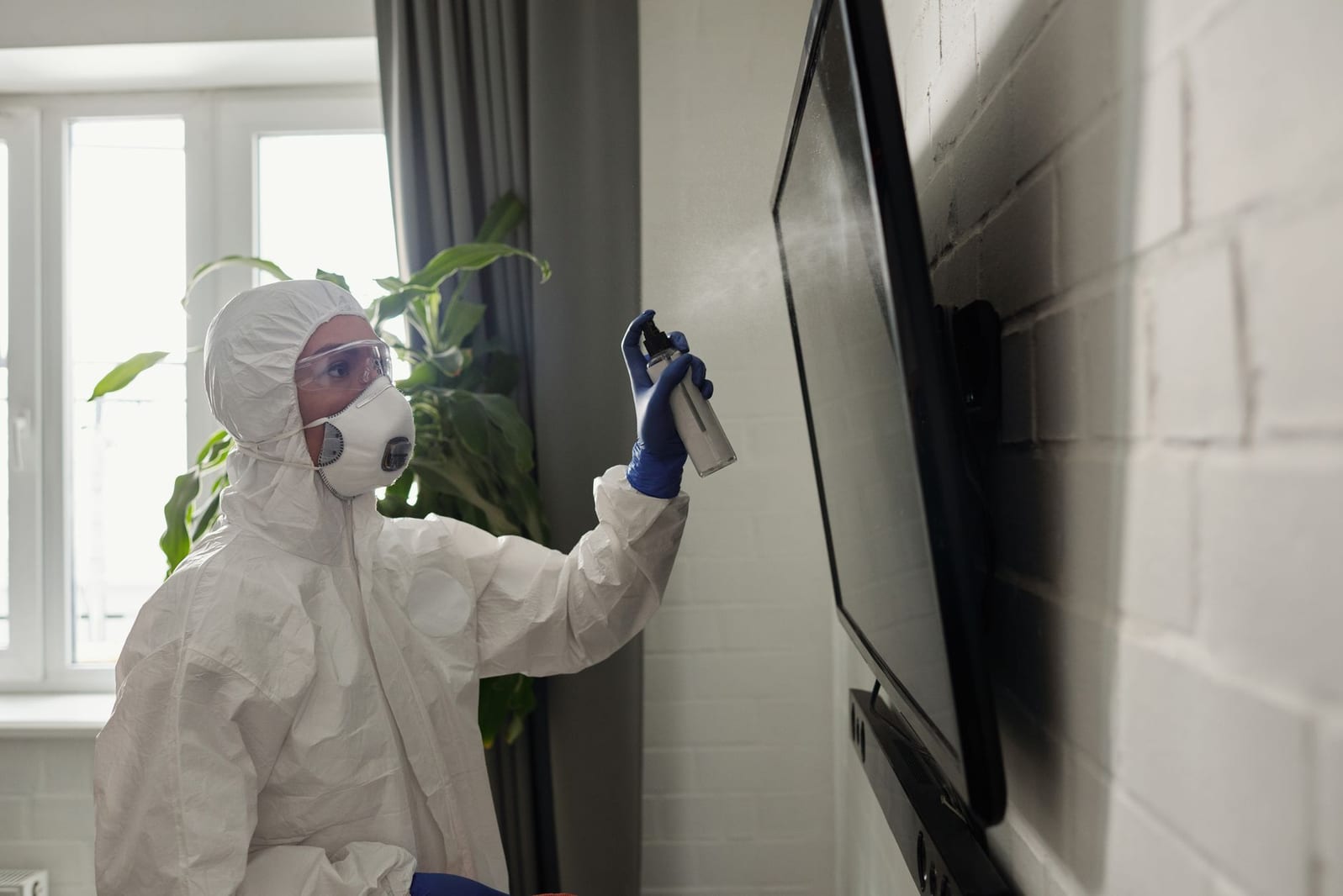
Sewage backup is classified as black water — restoration-industry standards (IICRC) treat it as Category 3, the most contaminated water classification, because it can carry bacteria, viruses and other pathogens regardless of how the backup happened. That classification changes the entire approach compared with a clean supply-line leak: our crews use protective equipment throughout, and the standard for what can be saved versus what has to be removed and discarded is much stricter, because porous materials that have absorbed contaminated water generally can't be fully sanitised.
The process starts with extracting the contaminated water as quickly as possible, since the longer it sits, the further it spreads into subfloor, baseboards and wall cavities, and the more surface area ends up needing disposal rather than cleaning. Carpet, carpet padding, drywall up to the affected height and other porous materials that contacted sewage are typically removed and disposed of rather than cleaned, while hard, non-porous surfaces (tile, sealed concrete, some hard flooring) can usually be cleaned, disinfected and retained.
Sanitisation is a distinct step from extraction — after contaminated materials are removed, remaining surfaces are cleaned and treated with hospital-grade disinfectants to address the bacterial contamination, not just the visible mess. We also address the underlying cause where we can identify it (a clogged main line, a failed check valve, municipal sewer backup during heavy rain) or flag when it needs a plumber, since sewage cleanup without addressing why it backed up leaves the same risk of recurrence.
Signs you have a sewage cleanup problem
- Sewage or wastewater has backed up into a basement, bathroom or lower-level fixture
- A toilet, floor drain or basement fixture is backing up rather than draining normally
- A strong sewage odor is present following a plumbing backup or heavy rain event
- Standing water with visible contamination or waste material is present in the affected area
- A previous sewage event was cleaned up without professional sanitisation and an odor or health concern remains
Why Brooklyn sees this
Older sewer infrastructure and combined storm/sanitary systems across parts of the NYC metro and northern NJ mean sewage backups into basements during heavy rain are a recurring, regionally known issue, not always a sign of a problem specific to one building.
Multi-unit buildings with a shared main line mean a backup can affect more than one unit's plumbing at once, and we coordinate with building management to confirm whether the issue is unit-specific or a shared-line problem before scoping the cleanup.
Basement-level bathrooms and laundry rooms, common in NYC and NJ housing, are typically the first fixtures affected by a main-line backup because they sit at the lowest point in the drainage system.