Sewage cleanup in Queens: what to know
Queens is the most varied borough by housing type, and its pest profile varies with it. The dense pre-war co-ops and garden-apartment buildings of Jackson Heights, Flushing and Forest Hills carry the shared walls, courtyards and ageing plumbing that let mice and German cockroaches move between units, while the borough's intense restaurant and market corridors — Roosevelt Avenue, Main Street in Flushing, Steinway Street in Astoria — drive some of the strongest rodent and roach pressure in the city.
Newer high-rise towers in Long Island City and older converted-industrial stock add elevator- and riser-borne rodent and cockroach pressure plus 'water bugs' from shared basements, and high tenant turnover across the rental stock keeps bed bugs a live concern in dense neighbourhoods like Jackson Heights and Jamaica.
Much of Queens, though, is detached and semi-detached single-family homes with yards — Bayside, Queens Village, Middle Village, Ozone Park — a profile heavier on ants, stinging insects, wildlife (squirrels, raccoons) and seasonal mosquitoes than apartment pests, with park edges like Alley Pond, Flushing Meadows–Corona and Juniper Valley adding warm-season outdoor pressure that pushes indoors as the weather cools.
Signs you need sewage cleanup
- Sewage or wastewater has backed up into a basement, bathroom or lower-level fixture
- A toilet, floor drain or basement fixture is backing up rather than draining normally
- A strong sewage odor is present following a plumbing backup or heavy rain event
- Standing water with visible contamination or waste material is present in the affected area
- A previous sewage event was cleaned up without professional sanitisation and an odor or health concern remains
How we treat sewage cleanup in Queens
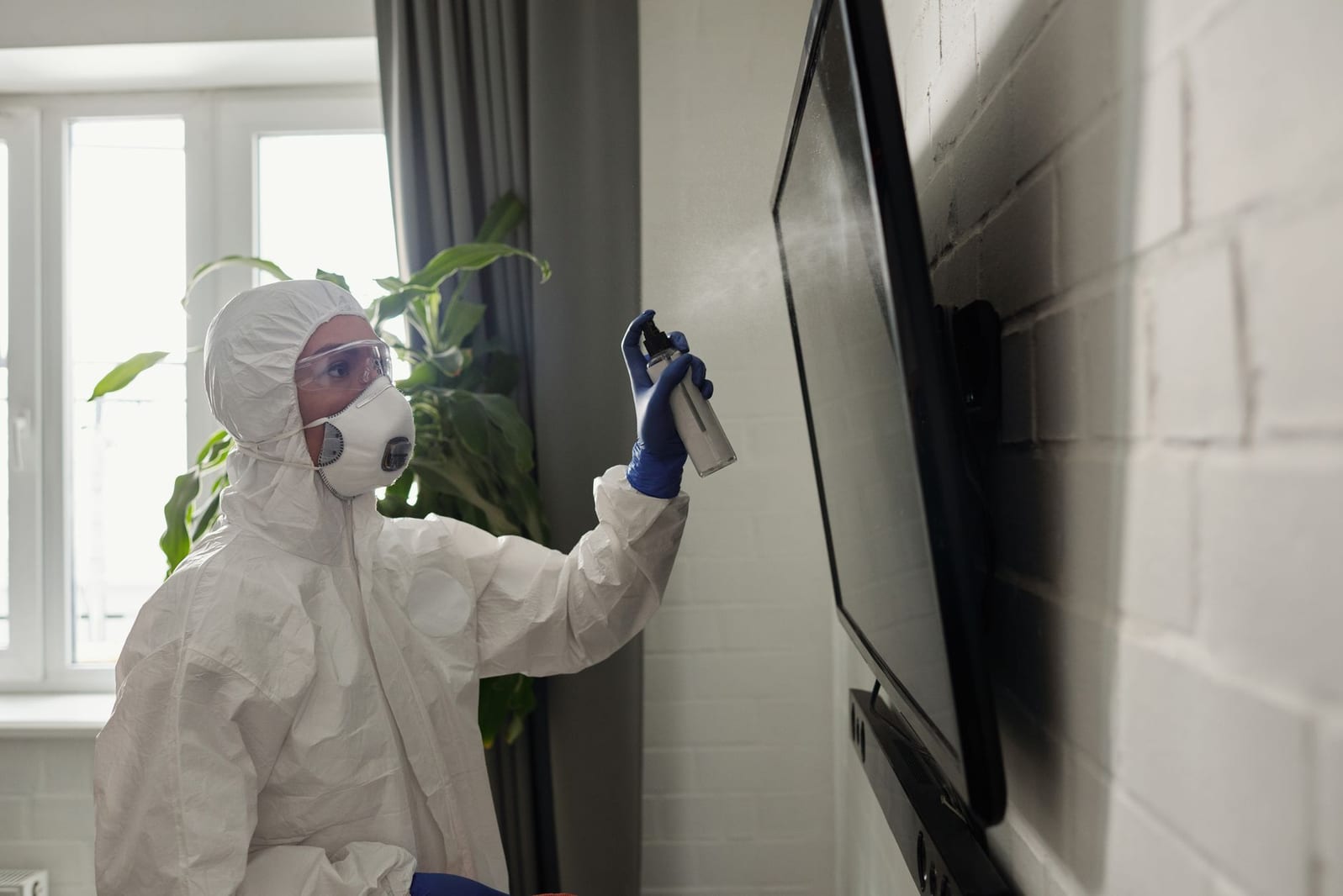
Sewage backup is classified as black water — restoration-industry standards (IICRC) treat it as Category 3, the most contaminated water classification, because it can carry bacteria, viruses and other pathogens regardless of how the backup happened. That classification changes the entire approach compared with a clean supply-line leak: our crews use protective equipment throughout, and the standard for what can be saved versus what has to be removed and discarded is much stricter, because porous materials that have absorbed contaminated water generally can't be fully sanitised.
The process starts with extracting the contaminated water as quickly as possible, since the longer it sits, the further it spreads into subfloor, baseboards and wall cavities, and the more surface area ends up needing disposal rather than cleaning. Carpet, carpet padding, drywall up to the affected height and other porous materials that contacted sewage are typically removed and disposed of rather than cleaned, while hard, non-porous surfaces (tile, sealed concrete, some hard flooring) can usually be cleaned, disinfected and retained.
Local landmarks & coverage
We serve all of Queens and the surrounding Queens area — including Flushing Meadows–Corona Park, Citi Field, USTA Billie Jean King National Tennis Center, Rockaway Beach, Astoria Park, Queens Boulevard — across ZIP codes 11354, 11355, 11372, 11375, 11101, 11102, 11103, 11385, 11432, 11435.